 702-623-6362


 A DUI arrest in Las Vegas can put much more than your driver’s license at risk. Depending on the circumstances, you could face criminal penalties, substantial expenses, restrictions on your ability to drive, and consequences for your employment or professional license.
But being arrested for DUI does not mean the prosecution has a strong case. Police officers make mistakes. Breath and blood testing can be challenged. And what appears convincing in an arrest report may look very different once the evidence is examined closely.
At LV Criminal Defense, attorney Nicholas Wooldridge represents people accused of driving under the influence of alcohol, marijuana, prescription medications, and other substances throughout Las Vegas and Clark County.
Our approach begins with the evidence. Why did the officer stop your vehicle? Was the investigation conducted properly? Do the test results support the charges? And can the prosecution prove every element of the alleged offense?
Whether you are facing your first DUI or a serious felony charge, we can help you understand your legal position and evaluate the available defenses.
Speak with attorney Nick Wooldridge about your case.
Nick Wooldridge has a long track record of representing clients accused of serious federal and state crimes in Nevada.


Call (702) 623-6362 — Available 24/7 — Free Consultation
On This Page
Nevada law prohibits driving or being in actual physical control of a vehicle while impaired by alcohol or certain drugs. The law also establishes specific blood alcohol concentration limits.
Under Nevada Revised Statutes Chapter 484C, a person can face DUI charges when:
For most adult drivers, the blood alcohol concentration limit is 0.08%. Commercial drivers are subject to a lower limit of 0.04%, and Nevada has additional restrictions for drivers under 21.
However, an important distinction is often overlooked: a driver may be charged with DUI even when the reported blood alcohol concentration is below 0.08%.
When I initially met with Mr. Wooldridge, he took the opportunity to sit and go over my problem with me. He described details in my case which he found disturbing and explained why he I should have him on my side.
The prosecution can pursue an impairment-based charge independently of a particular alcohol reading.
Conversely, an arresting officer’s opinion that someone appeared intoxicated is not conclusive evidence of guilt.
A DUI defense attorney examines which theory the prosecution is relying upon and whether the available evidence actually establishes it.
Yes. Nevada’s DUI law extends to a person who is in actual physical control of a vehicle, even when the vehicle is not moving.
This issue sometimes arises when someone decides not to drive after drinking and instead remains inside a parked vehicle.
The location of the keys, whether the engine was running, where the person was sitting, and how the vehicle came to be parked may all matter.
Nevada law provides a specific exception to actual physical control under certain circumstances. That exception is not automatic merely because a driver was asleep or the engine was off.
An attorney should examine the complete facts before accepting the allegation that the person was legally operating or controlling the vehicle.
A Nevada DUI arrest can trigger two different legal proceedings:
These proceedings have different purposes, rules, and potential outcomes.
The criminal process generally begins with an arrest or citation. Depending on the circumstances, the case may proceed in municipal court, justice court, or district court.
The appropriate course depends on the evidence and the client’s priorities.
The Nevada DMV may take action against your driving privileges independently of the criminal court.
That means a favorable result in the criminal case does not automatically resolve every licensing issue.
Depending on the circumstances, you may have an opportunity to challenge the administrative action through a hearing.
The Nevada DMV Office of Administrative Hearings explains how drivers can request review of license revocations and other administrative decisions.
Time is critical. Many DUI notices give you very little time to either ask for a hearing or do something else. Therefore, read the actual notice right away instead of just thinking that the criminal court date is the only thing you have to worry about.
Our related guide explains administrative driver’s license suspension following a Nevada DUI.
There is no single defense that works in every DUI case.
An effective defense starts by identifying precisely what the prosecution must prove and testing the reliability of the evidence offered to establish it.
Police generally need a legally sufficient reason to stop a vehicle.
An officer might describe speeding, an equipment violation, unusual driving, or another suspected traffic offense.
But the officer’s explanation should be tested against the available evidence.
Dash-camera footage, body-camera recordings, dispatch information, GPS data, and the officer’s written report may reveal inconsistencies.
If police obtained evidence through an unconstitutional stop or search, the defense may seek to suppress that evidence.
Suppression is not automatic. The court must evaluate the specific constitutional violation and the applicable legal rules.
Nevertheless, the legality of the initial encounter is often one of the first issues worth investigating.
 Officers frequently use roadside exercises to assess suspected impairment.
These may include walking in a straight line, standing on one leg, or following an object with the eyes.
Although these exercises can provide evidence, performance may be affected by factors unrelated to alcohol or drug impairment.
Examples include:
A person who struggles with a roadside exercise is not necessarily intoxicated.
The attorney should examine the officer’s training, the conditions at the scene, the instructions provided, and any available video.
Learn more about field sobriety tests and potential defenses.
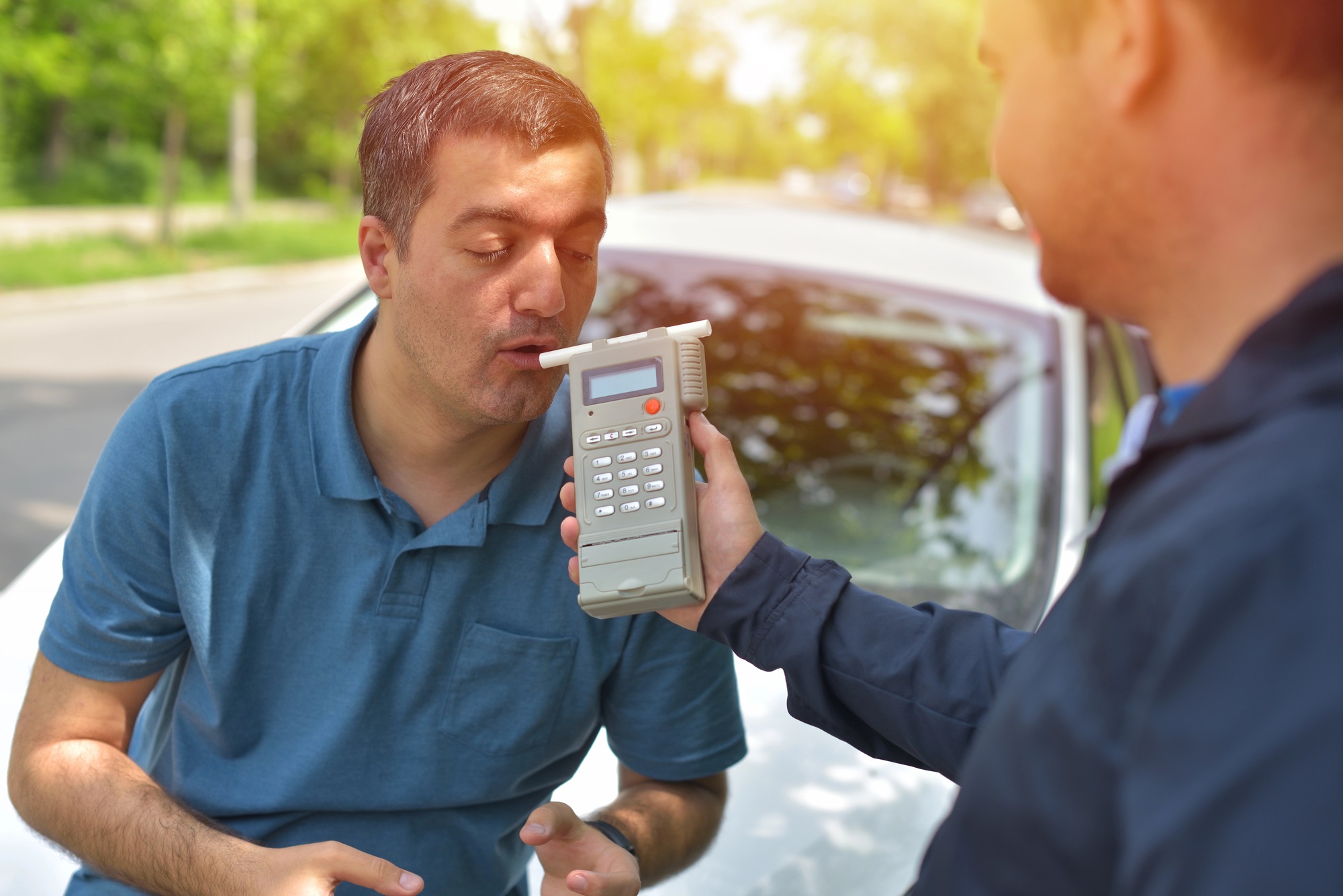
The Nevada Administrative Code provisions governing intoxication testing provide technical rules relevant to the administration and reliability of chemical tests.
The issue is not simply whether the machine displayed a number. It is whether the prosecution can establish that the reported result is reliable and legally significant.
See our guide to breath testing and the Intoxilyzer.
Blood testing raises a different set of questions.
Unlike breath testing, blood analysis involves collecting a physical sample and processing it through laboratory procedures.
An attorney may examine:
The fact that a laboratory produced a result does not eliminate the need to examine how that result was obtained.
Our Nevada DUI blood test defense guide addresses these issues in more detail.
Blood alcohol concentration can change over time.
In certain cases, a person may have a higher concentration when tested than when they were driving.
This possibility is sometimes described as a rising blood alcohol defense.
Its relevance depends on the timing of alcohol consumption, driving, testing, and the prosecution’s particular theory of the offense.
Nevada law also addresses alcohol concentrations measured within a specified period after driving. An attorney must therefore analyze the timing evidence in the context of the statute rather than assume that a later reading is irrelevant.
Receipts, messages, video footage from surveillance cameras, witness statements, and other types of documentation can all be used to create an accurate timeline.
DUI cases involving drugs (marijuana/prescription medications) are often different than those involving alcohol in terms of what type of evidence is available.
A driver may have lawfully consumed marijuana or taken a medication prescribed by a physician. That does not necessarily answer whether the person was impaired while driving.
A proper defense should distinguish among:
The prosecution’s legal theory matters, and different statutory provisions may apply to different substances and circumstances.
Medical records, toxicology analysis, dosage information, body-camera footage, and observations made during the arrest may all become relevant.
Read more about marijuana DUI charges and DUI allegations involving prescription medications.
Nevada’s implied consent provisions are an important part of DUI enforcement.
Under NRS Chapter 484C, including the provisions governing preliminary and evidentiary testing, motorists may be required to submit to legally authorized chemical testing in specified circumstances.
However, the rules are more complicated than the frequently repeated statement that police can simply force every driver to provide a blood sample.
The type of test, the circumstances of the arrest, the driver’s response, applicable statutory procedures, and constitutional requirements all matter.
For example, obtaining a nonconsensual blood sample may implicate the Fourth Amendment and the legal requirements for a warrant or an applicable exception.
Refusing a legally required test may also produce administrative consequences affecting driving privileges.
A defense attorney should evaluate both sides of the issue:
An arrest report’s description of a refusal is not necessarily the final word.
Learn more about Nevada’s implied consent law and the consequences of refusing DUI chemical testing.
The consequences depend on the type of charge, the person’s prior record, whether an injury or death occurred, and other statutory factors.
Nevada’s principal DUI sentencing provisions appear in NRS 484C.400 and related statutes.
When there are no other factors that make the offense more serious, a first DUI within the relevant lookback period will typically be considered a misdemeanor in Las Vegas.
Possible penalties include:
The exact sentence depends on the applicable law, the court, and the circumstances of the case.
The Nevada DMV DUI information page explains many of the licensing and reinstatement consequences.
For more information, see our page on first-offense DUI defense in Las Vegas.
A second qualifying DUI within seven years is generally prosecuted as a misdemeanor, but the penalties are more demanding.
The court may impose a longer period of confinement, higher financial penalties, treatment requirements, and other conditions.
The DMV consequences can also be significantly more restrictive.
Prior convictions and the dates of the underlying offenses must be examined carefully. The legal calculation can involve more than simply counting seven calendar years backward.
A defense attorney should review the records supporting any alleged prior conviction and determine whether the prosecution can legally use it to enhance the current charge.
Read more about second DUI charges in Nevada.
A third qualifying DUI within seven years is generally a category B felony.
The potential punishment can include a state prison sentence of one to six years and substantial fines, subject to the applicable statutory provisions and exceptions.
Felony DUI charges may also arise in other circumstances, including certain prior felony DUI convictions or an incident resulting in serious injury or death.
These cases require particularly careful investigation because both the criminal penalties and collateral consequences can be severe.
Learn more about third DUI offenses and when DUI becomes a felony.
When a DUI incident results in substantial bodily harm or death, Nevada law provides for significantly enhanced penalties.
A prosecution may involve accident reconstruction, medical evidence, toxicology, vehicle data, witness testimony, and questions about causation.
It is not enough to examine only whether the driver consumed alcohol or another substance.
The defense must also evaluate whether the prosecution can establish the legally required connection between the alleged conduct and the resulting injury or death.
These cases may involve competing explanations for how the accident occurred.
See our guide to DUI causing serious bodily injury or death.
Commercial drivers are subject to different alcohol limits and additional licensing consequences.
Even when a criminal charge is resolved favorably, the effect on commercial driving privileges may present a separate concern.
For professional drivers, protecting the ability to work can be as important as the immediate criminal outcome.
Read more about commercial DUI defense in Nevada.
For many clients, the first practical concern is whether they can continue driving to work, school, or family obligations.
A DUI-related license revocation can occur through the DMV even when the criminal case remains unresolved.
The outcome may depend on the basis for the revocation, the test results or alleged refusal, the driver’s prior history, and whether available administrative remedies are pursued.
Depending on the circumstances, ignition interlock requirements or other reinstatement procedures may apply.
An attorney can help evaluate:
The official Nevada DMV guidance on DUI and license reinstatement describes these administrative consequences.
Do not assume that dismissal of the criminal DUI charge automatically reinstates your license. The criminal and administrative systems operate separately.
A DUI case can turn on details that seem unimportant immediately after the arrest.
Evidence may disappear quickly. A nearby business may overwrite surveillance footage, or a witness may become difficult to locate.
Depending on the circumstances, useful evidence may include:
Your attorney can determine which records may be relevant and how to seek their preservation.
Avoid discussing the facts of the arrest publicly or posting about the incident on social media. Also avoid assuming that an informal explanation to investigators cannot later be used in the case.
Some people assume that hiring a DUI lawyer simply means having someone appear in court and negotiate a reduced sentence.
That can be part of the representation, but a thorough defense involves much more.
The attorney’s first responsibility is to understand the evidence and determine what the prosecution can actually prove.
At LV Criminal Defense, our evaluation may involve the following steps.
We examine the basis for the stop, the officer’s stated observations, and the circumstances leading to the arrest.
Depending on the case, this can include police recordings, test records, laboratory reports, dispatch information, and other materials.
We evaluate whether there is a basis for challenging evidence, contesting specific allegations, disputing enhancements, or raising other defenses based upon the facts.
The analysis includes not only criminal punishment but also licensing issues and other consequences important to the client.
A first-time DUI involving a disputed breath result requires a different approach from a felony DUI involving an accident.
The strategy should reflect the actual facts, the applicable law, and the client’s circumstances.
The objective is to identify the strongest available legal position, not to assume that every DUI case must end in a guilty plea.
Yes, dismissal may be possible when the prosecution cannot establish the charge or when significant legal or evidentiary problems undermine its case.
However, dismissal is not guaranteed. The likelihood depends on the evidence and the circumstances.
Yes. A reported concentration above the statutory limit does not prevent you from challenging the test or other elements of the charge.
The attorney may investigate the testing equipment, operator procedures, timing, and admissibility of the evidence.
A reading above the limit does not automatically establish that the test was valid or that every legal requirement has been satisfied.
Nevada’s actual physical control provisions may allow a DUI prosecution even when the vehicle was stationary.
Whether the prosecution can establish actual physical control depends on the facts and the applicable statutory rules.
Yes. A valid prescription does not necessarily provide a defense if the medication impaired the person’s ability to drive safely.
However, the prosecution must still prove the applicable legal elements. Merely establishing that a person had a prescription or took medication does not resolve every question in a DUI case.
A Nevada DUI can affect drivers who hold licenses issued elsewhere.
Nevada criminal proceedings and licensing action may have consequences beyond Nevada, depending on the circumstances and the other state’s laws.
Learn more about out-of-state DUI charges in Nevada.
A first DUI may be a misdemeanor, but the potential consequences are significant.
An attorney can examine the evidence, explain the criminal and administrative processes, identify available defenses, and help you evaluate your options before making decisions that may have lasting consequences.
LV Criminal Defense represents people facing DUI allegations in Las Vegas and surrounding communities, including Henderson, Summerlin, North Las Vegas, Spring Valley, Enterprise, and other parts of Clark County.
A DUI arrest may occur on the Las Vegas Strip, after leaving a restaurant or casino, during a late-night traffic stop, or following a collision on a local road or highway.
The setting may affect what evidence is available.
An incident near a casino or commercial property, for example, may involve surveillance cameras or transaction records that help establish the timeline.
The location and circumstances of the arrest are relevant to the investigation, but our focus remains the same: examining the evidence and developing a defense appropriate to the individual case.
An arrest report presents the government’s account of what happened. It does not necessarily contain every fact that matters to the defense.
Attorney Nicholas Wooldridge and the LV Criminal Defense team work with clients to examine that account, evaluate the supporting evidence, and understand the consequences of the charges.
The initial consultation is an opportunity to discuss questions such as:
We believe that a client should understand the allegations, the potential consequences, and the available options before deciding how to proceed.
No attorney can promise a particular result. What matters is conducting a careful evaluation of the case and pursuing the defenses supported by the facts and the law.
If you have been arrested for DUI in Las Vegas, the steps you take early in the case can matter.
Evidence may need to be preserved. Administrative deadlines may require attention. And decisions made before you fully understand the allegations can affect the options available later.
Whether you are accused of a first DUI, a repeat offense, drug-impaired driving, or felony DUI, LV Criminal Defense can review your circumstances and discuss the next steps.
Call Nicholas Wooldridge and LV Criminal Defense at (702) 623-6362.
Available 24/7 — Request Your Free Consultation
For detailed information about particular DUI charges and legal issues, visit the following resources:
 Las Vegas DUI Defense Lawyer