 702-623-6362


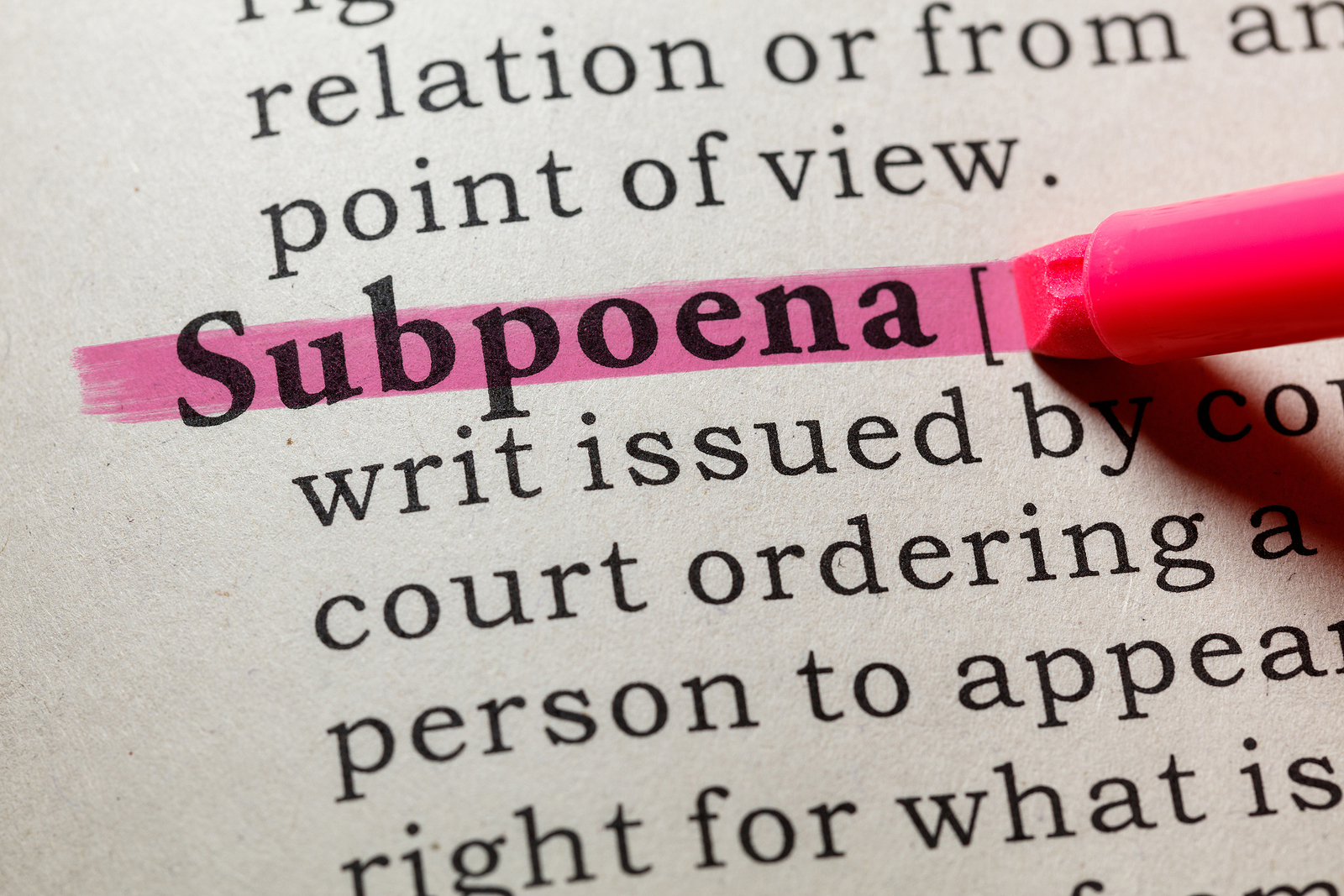 A subpoena may order you to testify at a court hearing, provide certain documents, or both. Just because you receive a subpoena doesn’t automatically imply that you’re being charged with a crime. However, it’s important to understand what is needed from you and when it needs to be provided instead of simply ignoring the subpoena.
Start with the court, the case number and the deadline. A Nevada criminal subpoena, a civil subpoena and a federal grand jury subpoena do not all follow the same rules. This guide primarily addresses subpoenas in Nevada criminal proceedings.
Attorney Nicholas Wooldridge and LV Criminal Defense can discuss questions about a criminal subpoena, including compliance, privileged information and concerns about your own legal exposure.
Call (702) 623-6362 or request a free initial consultation. Mention the issuing court and any approaching date. Contacting the firm does not extend a deadline or confirm that an attorney is handling the matter.
On This Page
Read every page, including attachments. Identify whether you must testify, supply records, or both. Check the date, time, location, recipient’s name and any instructions for confirming attendance. Keep the envelope and a note of how and when the document arrived.
Do not delete anything that could possibly be related to this matter. Do not remove any of the messages, do not alter any of the records and do not discard any of the files just because you believe they do not matter. Notify your attorney if you find there are some files missing from your computer, or if automatic deletion settings are going to prevent you from being able to preserve and meet your obligations.
Nick Wooldridge has a long track record of representing clients accused of serious federal and state crimes in Nevada.


Report problems as soon as possible. If you are ill, if you are out of town, if you get a lot of requests for records, or if you are concerned about confidential information, please take care of those concerns before the due date. A request for additional time to complete a task is different than an approved extension.
All changes should be verified through the proper channels. Verify all suspicious requests independently. The Clark County Sheriff’s Civil Process Bureau has stated that they will never call someone to ask for money for allegedly missing a subpoena or for other similar reasons. Always get official, independently verified contact information before you send money or provide personal information.
Do not assume that all valid subpoenas will come through the Clark County Sheriff’s Civil Process Bureau.
A subpoena to testify is an order from a court or other body for a person to appear and provide testimony at a specific time and place. Under NRS 50.165, once a person has been properly served with a subpoena, they must attend, answer all relevant and lawful questions, and remain until the court dismisses them. If there are issues related to privilege, these will need to be addressed separately.
Do not believe that simply informing the attorney who issued the subpoena about what you know will eliminate the requirement for you to appear.
When I initially met with Mr. Wooldridge, he took the opportunity to sit and go over my problem with me. He described details in my case which he found disturbing and explained why he I should have him on my side.
Often called a subpoena duces tecum, this document identifies records or objects to be produced. Read both the command and any attachment: supplying records does not necessarily excuse attendance.
Documentary Evidence and Objects, NRS 174.335, are used in Nevada Criminal Proceedings. Additionally, NRS 174.335 provides the Court with the authority to order production of documents/objects prior to Trial. The applicable instructions will establish the location and time that the materials must be provided.
Do not apply Nevada criminal procedures to a civil lawsuit or federal case without checking the governing rules. The court heading and proceeding matter more than whether the document was delivered in Las Vegas.
A federal grand jury subpoena may be issued prior to the filing of criminal charges. The U.S. Department of Justice’s grand jury guidelines distinguish between witnesses, subjects and targets.
A subpoena alone will not determine your status. For further information, see our federal criminal defense guide.
NRS 174.305 and 174.315 set forth the rules regarding court-issued subpoenas and some attorney-issued subpoenas. Both prosecutors and defense attorneys have authority to issue subpoenas under certain conditions. There are additional requirements for defense subpoenas of preliminary hearing witnesses.
The lack of a judge’s signature on a subpoena does not per se render it invalid. Counsel should look at who issued the subpoena and what requirements were required to be met, rather than simply looking at the subpoena itself.
NRS 174.345 allows for general service of process by any peace officer or any adult who is not a party to the action. However, there are specific options available for misdemeanor-trial subpoenas including Registered Mail and Certified Mail. NRS 174.315 also provides for acceptance of service through a qualifying Promise To Appear.
Therefore, when reviewing a telephone message or mailed document consider the circumstances.
Do not assume that because you did not personally deliver the document that you do not have an obligation to respond, nor should you assume that all informal requests are enforceable. Always maintain proof of delivery and your response.
There may be grounds to challenge a subpoena, limit the requested material or seek another appropriate order. The grounds and procedure depend on the type of proceeding and the problem identified.
NRS 174.345 allows for general service of process by any peace officer or any adult who is not a party to the action. However, there are specific options available for misdemeanor-trial subpoenas including Registered Mail and Certified Mail. NRS 174.315 also provides for acceptance of service through a qualifying Promise To Appear.
Confidentiality is different than being protected by law (privileged). For instance, in Nevada, the privilege law protects confidential attorney-client communication based upon a number of qualifications; however there are also many exceptions. Every type of communication will have its own set of rules.
Before producing any sensitive communication or third-party record; determine what protection applies and how to claim it. Do not just redact, withhold or destroy materials without knowing your obligation.
Witnesses who are subpoenaed to testify or produce documents may be entitled to separate counsel if the act of testifying or producing documents would expose them to criminal liability. Each situation is different; therefore, the Fifth Amendment does not provide a general right to refuse a subpoena or to withhold all requested documents. Federal grand juries also have their own rules concerning immunity.
Before you give any formal statements to either investigators or the issuing attorney, discuss your concerns with your attorney in private. Do not believe that objecting or filing a motion will delay the deadline. Be sure to find out what must occur during the time that the issue is being reviewed.
NRS 174.385 addresses contempt for disobeying a criminal subpoena without an adequate excuse after qualifying service or acceptance. Ignoring the document can therefore create a separate legal problem.
Nevada law allows for a judge to order a warrant to bring a witness who did not appear into court, if there are good reasons. NRS 50.205 sets out the rules and exceptions. Being arrested is not always the result of missing a court date. If you have missed a date, contact an attorney immediately and keep all documentation/communications regarding why you were unable to attend.
Do not assume that because you had a work conflict, received informal assurances from another witness, or sent a request to reschedule but did not receive a response, that you had permission to miss the court date.
Subpoenas are also used to obtain evidence for the defendant. When preparing a defense, there may be a witness that was present at an incident; or there may be records from another party (not on the prosecution) that need to be obtained. The goal is to determine what evidence is needed and how to legally obtain it.
For example, a disputed transaction might require business records, while an incident at a hotel might raise questions about recordings or access logs. These are examples of issues to investigate—not promises that particular records exist, remain available or can be compelled. Our white collar crime guide discusses the role of financial and digital evidence.
A subpoena and discovery serve different purposes. Counsel should focus on disclosure obligations, third party evidence, privilege, admissibility and schedule instead of assuming that a single document will provide complete access to all items listed. In addition, obtaining materials does not guarantee that those materials can be used as evidence in court.
Special procedures can apply to witnesses outside Nevada, people in custody and depositions. They should be addressed as part of trial preparation, not left until the day a witness is needed.
Confirm the court and issuing office. Las Vegas Municipal Court, Las Vegas Justice Court, the Eighth Judicial District Court and the federal District of Nevada are different courts. A case connected to Henderson or North Las Vegas may involve another local court. Residence in Summerlin, Paradise or Spring Valley does not, by itself, identify the issuing court.
For prosecution witnesses, the Clark County District Attorney’s attendance instructions and Las Vegas City Attorney’s witness guidance describe their respective procedures for checking whether attendance is still required. Follow the instructions applicable to your subpoena; do not borrow another court’s call-off procedure.
The Las Vegas Metropolitan Police Department (LVMPD) has a process in place to obtain police audio or dispatch information through the LVMPD Communications Research Office. There is a distinction between public-records requests and subpoenas, so you must follow the correct instructions based on your type of request.
Choose forms for the correct jurisdiction and purpose. The U.S. Courts’ criminal forms are federal forms, not substitutes for Nevada state-court documents. A form alone does not establish authority to issue it, valid service or a right to the material sought.
No, just receiving a subpoena doesn’t mean you’re going to get charged. It could be that you have documents that involve someone else’s behavior; or it could be that you were there when something happened. While being named as a witness will help protect you from some liabilities, it won’t protect you from everything. If the information requested concerns your own actions, contact an attorney.
Yes, however; you can only do this if the subpoena allows for it and there is an authorization from the court or other party involved. Most subpoenas require both testimony and documents. Always check your changes prior to assuming that sending files via email will fulfill all of your requirements.
Promptly address this concern. The process of obtaining witnesses from other states for use in a criminal case can involve courts in multiple states; moving away does not automatically resolve the issue. Nevada’s Uniform Act Regarding Out-of-State Witnesses outlines the process. All alternative appearances or travel arrangements must be confirmed.
In most cases, a witness will not need private legal representation for a routine appearance. However, independent counsel can be very helpful if there are potential criminal charges based on your answers; if the request involves privileged information; or if you are disputing whether or not you must comply with the subpoena. Do not assume that the lawyer who issued the subpoena is representing your best interests. Before discussing any sensitive issues, ask the lawyer who they represent.
A useful review begins with the complete subpoena, its attachments, the delivery circumstances and the next deadline. It should clarify what must be done, what concerns need legal attention and whether the firm can assist.
LV Criminal Defense assists clients in Las Vegas and surrounding Clark County communities, including Henderson, North Las Vegas and Summerlin. Whether you are responding to a subpoena or preparing a criminal defense, the appropriate steps depend on the proceeding and the evidence.
Call (702) 623-6362 or request a free initial consultation. Start with the court name, the general request and the deadline. Do not upload sensitive evidence through a general inquiry form; the office can explain how to provide further information appropriately.
Attorney advertising. Responsible attorney: Nicholas M. Wooldridge. This page provides general information, not advice about an individual matter. An inquiry does not establish representation or confirm that the firm is handling a subpoena, appearance or deadline.
