 702-623-6362


 A criminal charge is an accusation. A conviction requires proof. If your case is headed to trial in Las Vegas, the distinction matters — and so does the lawyer who will stand beside you when witnesses testify and the prosecution asks a judge or jury to find you guilty.
Attorney Nicholas M. “Nick” Wooldridge has represented criminal defendants since 2004, handling serious state and federal matters. His firm’s published case results include not-guilty verdicts in cases where clients faced potentially life-changing consequences. Nick has also taught trial skills to other attorneys, including opening-statement and cross-examination workshops at Trial Lawyers University.
At LV Criminal Defense, we will look at what the prosecutor has to show; what the evidence shows; and how the defense can put their case before the judge. We will also help you make your decisions about whether or not to take a plea bargain offered by the prosecutor; whether or not to have a jury trial if allowed under the law; and whether or not to testify.
If you have a trial date, or the prosecution has made an offer you are unsure about, call 702-623-6362 or request a confidential consultation. There is value in discussing your defense before those choices become urgent.
On This Page
A lawyer who prepares a case for trial must do more than know the charges and the statutes. The work involves deciding which facts to contest, which witnesses need to be challenged, what evidence the jury should hear, and when the most effective defense is to insist that the prosecution has not met its burden.
Courtroom decisions are made on-the-spot. A witness provides an unexpected answer. An objection is raised during evidence presentation. A juror expresses a concern that was not evident in the questionnaire. A judge issues a ruling which will affect how the defense can present their case. These are all examples of when a defense attorney must use judgment, prepare and be able to adjust as needed while still maintaining the focus of the defense.
Trial experience is also important prior to the start of the trial. Prosecutors assess the evidence, risk of contested testimony and probability of successfully prosecuting the case in court. A defense team that is fully prepared to go to trial is best equipped to make decisions regarding possible resolutions.
This does not mean that every case should be tried. It means that the decision to try a case should be based upon preparation and not fear of the courtroom.
Nick Wooldridge is a Las Vegas native who has practiced criminal defense in Nevada and New York. LV Criminal Defense was founded in 2015. Nick’s work includes serious allegations prosecuted in state court and federal criminal cases, where the rules and strategies can differ.
The company’s case results archive lists the following verdicts from trials:
| Case | Published trial result |
|---|---|
| State of Nevada vs. F.P. (2021): | This client was charged with four counts of sexually assaulting a child less than 14 years old and one count of first degree kidnapping. The jury found him/her not guilty on all five counts. |
| State of Nevada v. C.L.C. (2021): | The case involved four serious sexual-offense counts and multiple accusers. The reported result was not guilty on all four counts. |
| State of Nevada v. J.O. (2019): | In a district-court case involving an allegation of domestic battery by strangulation, with expert-witness testimony, the reported verdict was not guilty. |
| City of Las Vegas v. A.H. (2019): | A domestic-battery case reportedly ended with a not-guilty verdict following trial. |
These are the firm’s published summaries, not a forecast of what will happen in another case. Every trial turns on its own evidence, witnesses, charges, rulings, and jury or judge. Prior results do not guarantee a similar outcome.
There is another kind of courtroom experience worth examining: the ability to explain trial advocacy to other lawyers. Trial Lawyers University has listed Nick as an instructor in opening-statement connection and cross-examination training. Teaching an exercise is not the same as obtaining a verdict, but it provides a concrete example of his continued engagement with trial techniques.
Nick’s Insights
Nick Wooldridge draws on his courtroom experience across Nevada to explain how he tests a defense, listens to prospective jurors, challenges prosecution witnesses and helps clients weigh trial against a plea agreement.
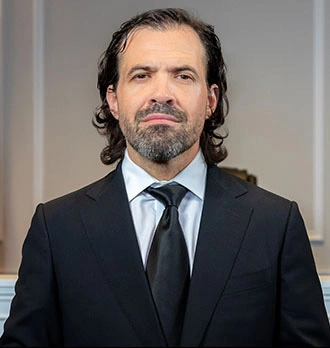
I have been involved in nearly 30 trials in Nevada, counting jury and bench trials. I was lead counsel in all but one. I have been involved in well over 100 evidentiary hearings, where I am examining witnesses.
One of my favorite trials here in Las Vegas involved two brothers facing extremely serious charges carrying life sentences. There were three separate cases—one against one brother and two against the other—with multiple alleged victims. We obtained conflict-of-interest waivers from the clients and combined the cases because I believed the jury needed the entire story, not half of it with another accusation potentially coming in later. Some people would have called me crazy for doing that, but I wanted the jury to hear everything, including that there were two accusers. After a five-week Nevada trial, the jury found our clients not guilty on every count—approximately ten counts.
Another was a sex case with three accusers against my client. Some people thought it was unwinnable because of the sheer number of accusers, but after a nearly three-week trial, my client was acquitted of every count.
A third trial took place in a very rural Nevada area where two local people had been killed. We faced a highly prejudicial case in a highly prejudicial jurisdiction, but we obtained a not-guilty result.
I think people miss the distinction between a Las Vegas trial lawyer and a lawyer who does not actually try cases. Trial work requires a special skill set: creativity, an ability to connect with people, and persuasion. I do not know exactly where the AI frontier is going, but I believe those skills will become even more valuable as AI changes legal work. A client needs to know whether the lawyer they are hiring is actually an experienced Nevada trial lawyer.
Early on, I relied more on talent and a little luck. Since then, I have done countless trainings in presentation, cross-examination, demonstrative evidence, and how to present a Las Vegas criminal case persuasively to a jury. Those skills have been honed through years and years of training, and I still train. I work on my presentation skills almost every morning.
My first question is whether this is a triable case—a case we can win—and that depends on the facts, the defense, and how we frame it. Missing elements, witness weaknesses, and contradictions can all matter, but none is a universal starting point; contradictions, for example, can let me impeach a witness with something they said differently before trial. I have developed a sense of which cases are strong, but the best test is feedback from people who are not connected to the case, just like a jury. A major Las Vegas company tests a product before bringing it to market, and I want to test our case the same way. My approach is focus group, focus group, focus group. Big-data focus groups across Nevada are now another option as well.
I see this happen often: a Las Vegas police report can sound persuasive because it presents a one-sided account. Once I start digging into the facts and the context of what really happened, my understanding of the case often changes.
I am brutally honest with clients about unfavorable evidence and where we stand. They may not want to hear it, but avoiding that conversation would do them a disservice. I am upfront from the beginning because I need to manage expectations. I want to be a man of my word and come through for them.
It depends on the case: if we need expert evidence in a Las Vegas proceeding, I need an expert witness to present it. But in some sex cases, I would rather keep the focus on the story than on an expert’s opinion. People understand stories and relate to them; they do not necessarily relate to psychological mumbo-jumbo.
The biggest mistake I see is not listening—thinking about the next question instead of hearing what the juror is saying. Another is making assumptions based on appearance, race, or gender; you cannot know how someone thinks from those things. I need to question jurors and actually listen to their answers. I also want them to know that this is a place for brutal honesty, where free speech is supported and they can tell us how they really think and feel.
I use this approach often, especially with a Las Vegas Metro Police detective. I build the foundation by establishing the detective’s training and what they were supposed to do, then show how they violated that training and those responsibilities. That is where the betrayal comes in. In my experience, that betrayal is what upsets the jury and moves them toward the defense.
It is very rare that I do not cross-examine a witness. If I leave a witness alone, it is because nothing in the direct examination hurt the defense. I want the jury to see that there is nothing here that matters to our case and that I am not going to waste their time on it.
If a case is complicated for me, it will be even more complicated for a jury, so I have to simplify it through a story. That means telling the facts as a narrative rather than presenting fact after disconnected fact. A story gives jurors a way to listen, follow, remember, and believe what they are hearing.
An opening can fail because the Las Vegas trial lawyer does not connect with the jury or because the story is too complicated. There may be too many characters or no visual aids to help jurors follow along. I want a simple story that is easy to understand, practiced many, many times. I also want to practice it with a focus group so I know whether people understand the theory and whether the opening is landing.
Yes, of course I have. Trial is a fluid process: I can plan for most things, but sometimes an unexpected answer or ruling means I need to change things up.
I lay out the options, but the choice belongs to the client. If a client wants to go to a Nevada trial, I do not think it is right to push them into a plea bargain simply because that is what I would prefer. If I believe a case is completely indefensible and we will lose, though, I will say so plainly and discourage trial. I personally do not want to try a case I do not believe I can win, and in that situation I may encourage the client to find another lawyer.
I have seen preparation and a lawyer’s reputation in Las Vegas and across the entire state of Nevada create a situation where a case does not need to go to trial. Prosecutors do not want to lose. But I have to prepare for war even if I believe a truce is likely, because that truce may not happen and war may be imminent.
I always prefer a jury trial, and I have never told a client that a bench trial would be better. I like judges, but I am skeptical about asking an elected judge to side with an individual defendant against a Vegas prosecutor’s office whose votes the judge may need. I would rather put the case before a jury.
I tell clients to get their rest and meet with me as often as I need them so we can be prepared. I do not want them stuck in their own heads worrying. I want them to stay positive and be manifesting the win.
What I am describing is our use of focus groups before trial. We almost always do one, either once we know we are going to trial or while we are deciding whether we should. I usually have the client there so they can watch how people react to the evidence and the theory of the case.
A focus group here in Las Vegas lets me see how people actually react to the evidence and our theory, rather than just how the case looks in the file. In one case, that feedback told me people were not going to let my client walk away without paying for something, even though we had a path to complete acquittal. We wove a misdemeanor lesser-included offense into the defense rather than relying only on total innocence on the felonies. The jury latched onto that lesser-included offense, which was still a total win for my client.
I am a member of the National Trial Lawyers Association and Trial Lawyers University. At Trial Lawyers University, I am both a student of the game and a teacher—a trial coach.
I have been involved in Trial Lawyers University since 2021, conducting workshops and assisting with presentation, cross-examination, and jury-selection skills. Yes.
A strong defense does not have to be loud; it can be the defense that identifies the main issue, tests the supporting evidence, and clearly communicates that issue to the people who will decide the outcome of the case. While each prosecution will differ, many of the same trial tasks will occur.
A criminal charge contains elements. The prosecution must establish each required element beyond a reasonable doubt. Before trial, we look for gaps between an allegation and the proof needed to sustain it: identity, intent, timing, the reliability of a witness, or what physical or digital evidence truly establishes.
The most important thing at times is what a witness saw; other times, it’s what a witness didn’t see. At times, a recording will confirm some of the accusations made against an individual but won’t provide enough proof to show that the individual had criminal intent required by the charge. A good trial theory takes into consideration both the evidence that supports the prosecution and the evidence that undermines it.
Look for a trial lawyer with a track record. Call Nick Wooldridge to discuss your trial.




It is a process to determine if prospective jurors can hear the evidence, follow the judge’s instructions, and fairly apply the presumption of innocence. A person may truly believe they can be impartial; however, their beliefs may have some assumptions that should be examined closely.
Nevada law provides for questioning prospective jurors and challenges for cause when a juror cannot fairly decide the facts. The process is governed in part by NRS 175.031 and 175.036. The questions counsel asks and the issues counsel chooses to explore can matter as much as the final selection.
Cross-examination is not about arguing with every answer. It is about determining what the witness knows, how the witness knows it, and whether the testimony holds up when tested against documents, recordings, prior statements, or other witnesses.
An inconsistency may be important; however, it could also be due to something harmless. The defense must understand the distinction between these two possibilities. A good cross-examination will reveal if a witness made a mistake in identifying someone, based their testimony on assumptions that were not supported, had limitations in their investigation, or testified as a result of an agreement with the prosecutor.
Nevada has established some special protections when cross-examining certain cooperating witnesses, such as those provided for under NRS 175.282.
Jurors often have difficulty evaluating medical, forensic, financial, digital, and other types of technical evidence without some form of explanation. When necessary, the defense can hire their own expert; dispute the prosecution’s interpretation of the evidence; or request that the court limit the testimony of any witness who does not have a sufficient basis for testifying. NRS 175.271 governs expert witnesses in Nevada criminal trials.
But an expert is not useful merely because the expert has credentials. The testimony must address a real issue in the case and withstand questioning. Likewise, a timeline or courtroom visual should clarify the evidence rather than substitute for it.
The opening statement provides a guide for jurors to understand the evidence that they will receive. The opening statement is not considered evidence. In contrast, the closing argument summarizes what was shown, what is still unknown, and how the jury should apply the law based on the judge’s instructions.
A courtroom presentation should be easy to follow but should not minimize the complexity of the case. One reason why Nick’s experience as an instructor of trial advocacy is useful is because jurors need to see a clear explanation of the dispute and not just listen to legal jargon that they have never heard before.
For more on investigations, discovery, and pretrial motions, see our Nevada arraignment and trial-preparation guide.
The order of a Nevada jury trial is governed principally by NRS Chapter 175. A particular case may involve additional hearings or rulings, but the usual sequence is easier to understand than the statute book makes it look.
Potential jurors will be asked if they can make a fair decision on this matter. The judge will begin the process of examining potential jurors, and then attorneys may continue to ask additional questions as permitted by the court. Some potential jurors may be dismissed for cause; each party has a set amount of peremptory challenges. After being chosen, jurors swear to make a decision based upon the evidence presented and the applicable laws.
The prosecution will present their case as to what they expect to demonstrate. After the prosecution presents its case, the defense can either provide an opening statement at that time; or, pursuant to Nevada’s statutory trial order, wait until after the prosecution has presented all of its evidence before providing one. Both the prosecution’s and the defense’s opening statements are not considered testimony or evidence.
However, even though the prosecution has stated its case, they must still prove the crime through admissible evidence.
The prosecutor presents witnesses and provides allowed evidence. Defense attorneys may cross-examine those witnesses and object to any evidence that is presented. It is up to the defense to determine if all of the necessary elements have been met; it is not just about how much evidence the prosecutor has brought forth.
The defendant does not have an obligation to demonstrate his/her innocence. Depending upon the situation, the defense may use witnesses, documents, expert testimony, and/or point out problems with the prosecutor’s evidence. In addition, the defendant has a right under the Constitution to choose whether he/she will testify. Although this decision should be made after consulting with counsel; ultimately, it is up to the defendant.
The attorneys present their final arguments on the basis of all evidence presented, as well as any allowed rebuttal. At this time, the judge will provide legal instruction to the jury about what the prosecution has to establish and how the law is applicable. NRS 175.141 & 175.161 govern the sequence of events during a trial and the issuance of jury instructions.
The jury will make their decision privately. In a Nevada criminal jury trial, the jury must come to a unanimous decision and return that decision in open court pursuant to NRS 175.481. The jury may also consider a lesser-included offense which is legally available. If the jury cannot reach the required agreement, the court may declare a mistrial rather than a verdict and a retrial may be possible.
The accused is presumed innocent until proven guilty, at all stages of the proceeding. Reasonable doubt is a cornerstone of the court’s instructions and the prosecution’s burden under NRS 175.191 and 175.211. The defense does not need to present an alternative explanation for every fact.
A jury trial allows the jury to find the facts and render a verdict based upon the court’s legal instructions. A bench trial has the judge serve as the fact finder. When there is a lawful choice, which format is best will depend on the charges, the evidence available, the legal issues, and the circumstances of the case. Neither format ensures a favorable outcome.
Under NRS 175.011, a case that must be tried by jury remains a jury trial unless the defendant waives that right in writing with the court’s approval and the prosecutor’s consent. A defendant who pleads not guilty to a capital offense must be tried by jury. NRS 175.021 generally provides for 12 jurors, although a smaller jury of at least six may be agreed upon in writing before selection with the court’s approval.
Timing is important. Generally, in Nevada Justice Court, NRS 175.011 requires a written request for a jury at least 30 days prior to trial when this requirement applies. However, not all misdemeanors have the same jury trial rights; and the rules differ between Nevada State Court and Federal Court. Do not assume you can make a request on the morning of trial.
If you are considering a bench trial or have been asked to waive a jury, speak with your attorney about the decision before signing anything. Our separate guide covers trial by jury or court in Nevada in greater statutory detail.
The decision between accepting a plea bargain and going to trial is complex and depends upon many factors. While a plea agreement will eliminate the uncertainty of a jury verdict, it may result in serious penalties or long-term negative effects. Going to trial provides an opportunity for the defendant to challenge the charges against him/her; however, it also puts the defendant at risk of receiving the maximum penalty allowed by law should he/she be found guilty.
Before recommending a course of action, a defense lawyer should explain the strengths and weaknesses of the evidence, the offenses the prosecution can prove, possible sentencing outcomes, and the practical consequences of a conviction or plea. Employment, professional licensing, immigration status, firearm restrictions, registration requirements, and the effect on a family may all deserve attention depending on the charge.
The client makes the decision regarding a plea bargain and not the attorney. While the attorney may negotiate and provide recommendations to the client, it is ultimately up to the client to decide if they will enter a guilty plea or go to trial. Ultimately, however, the court has the final say in accepting a plea. Additionally, a reasonable trial strategy includes considering a potential plea bargain as well as preparing for trial. Proceeding towards trial does not preclude the possibility of negotiating a plea bargain.
One example from the firm’s published case results involves a 2025 felony-theft matter in which the client reportedly rejected a proposed resolution conditioned on a bench trial. The prosecution dismissed the case shortly before the scheduled jury trial. That was a pretrial dismissal, not a trial acquittal — a useful distinction when evaluating attorneys’ claims about their records.
Mock trials provide opportunities to test out the aspects of cases which may be difficult to see on paper; such as how well your opening argument will sound to a lawyer versus an individual who is unfamiliar with the legal system, whether you have asked too many questions during cross-examination, and if your visuals are distracting from the evidence.
While mock trials cannot simulate a real jury nor can they determine what the outcome of a trial would be, they can help identify issues prior to those issues becoming relevant in court.
Nick Wooldridge has conducted mock-trial exercises for public audiences and has been involved in teaching trial skills. Trial Lawyers University has identified him as an instructor for opening-statement workshops and cross-examination training. These programs focus on the concrete skills of presenting testimony, questioning witnesses, and communicating with jurors.
The most important issue for a person seeking a criminal defense attorney is not just if they have completed trial training; it is what they have learned from actual cases, how those lessons will affect their preparation for your case, and if they can clearly articulate a logical defense in simple terms. These are all valid topics to discuss during an initial consultation.
An acquittal is when a jury finds a defendant not guilty of a specific charge. If a jury finds a defendant guilty, the defendant can be sentenced; however, the penalty and timing of sentencing will vary based upon the crime committed and other factors. A jury can find a defendant guilty of some charges and not guilty of others. A jury can also find a defendant guilty of a lesser included offense. A deadlocked jury will typically result in a mistrial and not a final decision.
Following a conviction, there are several options available to defendants such as filing post-trial motions, being sentenced, and/or appealing. Each of these options is different and has its own deadline.
For example, NRS 175.381 allows for a defendant to file a motion for judgment of acquittal after a guilty verdict has been rendered under certain conditions.
Appeals have their own set of procedures. Just because a defendant was convicted does not mean that he/she will be successful on appeal.
If your trial has already ended, read our guides to criminal appeals and post-conviction relief, and discuss time-sensitive options with an attorney promptly.
No. The defendant has a constitutional right not to testify. Nevada’s NRS 175.181 addresses how that right is handled in jury instructions. Choosing whether to testify calls for a detailed discussion of potential benefits, cross-examination, and the evidence already presented.
It is possible for charges to be dismissed or otherwise resolved after proceedings begin, but the circumstances and legal consequences differ. A defendant should not assume that a perceived weakness in the prosecution’s case will automatically produce a dismissal or acquittal.
There is no single answer. Jury selection, the number of witnesses, expert testimony, legal disputes, and the complexity of the charges can turn a short case into several days of proceedings or a complicated case into a much longer trial. Counsel should discuss a realistic range for your particular matter.
If the jury cannot reach a unanimous verdict, the judge may declare a mistrial under applicable law. That does not necessarily mean the charges disappear. Depending on the circumstances, the prosecution may seek another trial.
Sometimes. Under NRS 175.501, a defendant may be convicted of a legally included lesser offense or certain attempts when the evidence and law support that option. It is not available in every case.
Perhaps, however, timing and the status of the case will be relevant. Courts need to evaluate based upon the appropriate legal standard, and changing attorneys may not provide grounds for a continuance. NRS 175.383 provides limitations on when an attorney can withdraw from a case, be discharged by a client, or substituted for another attorney in Nevada criminal cases.
Bring up issues as soon as possible as opposed to waiting until jury selection.
No. When an individual is convicted of a crime, they are subject to being sentenced based upon the law that applies to the specific offense they were convicted of; this includes any potential enhancements or other ramifications. The type of sentence that can be imposed will depend on the offense(s) charged, the defendant’s prior criminal record, the evidence presented at trial and the sentencing guidelines.
No. State and federal prosecutions have different procedural rules, courts, juries, and sentencing systems. If the allegations arise under federal law, see our guide to federal criminal defense in Las Vegas and obtain advice specific to the forum handling your case.
If you are facing a jury trial in Las Vegas, Henderson, North Las Vegas, or elsewhere in Clark County, the next conversation should be about the evidence and your real choices, not a promise about how the case will end. The same is true if a plea offer is on the table and you want to understand the consequences of rejecting or accepting it.
At LV Criminal Defense, Nick Wooldridge and the defense team review the allegations, available records, witnesses, and legal issues so clients can make informed decisions about their cases. Our experience includes contested trials in serious criminal matters, as well as the preparation and negotiation that occur before a case reaches the courtroom.
Call 702-623-6362 or contact LV Criminal Defense to arrange a confidential consultation. Prior results do not guarantee a similar outcome.
Legally reviewed by Nicholas Wooldridge. Last reviewed: .
